
We are pleased to announce a new series of courses with an emphasis on the history of the Midlands the first of which will start in April 2027, with more to follow in the autumn. The inaugural course is entitled ‘The Lunar Society in the West Midlands’ and is led by Dr Malcolm Dick OBE and Dr Kate Croft both of whom began researching the Lunar Society in 2002 as part of the West Midlands Revolutionary Players Project. Subsequently, Malcolm and Kate have continued research, write and present on the Lunar Society to various audiences and contributed to the establishment of the History West Midlands project.
What was the Lunar Society? From the mid-1760s until the early 1800s, the Lunar Society (so called as its members met at the time of the full moon) was probably the most intellectually dynamic group of individuals outside London. Based in Birmingham and Staffordshire, the men who formed this club of gentlemen contributed to new thinking and activity in science, technology, industry, politics and education. This 10-week course will examine the impact and influence of the Lunar Society and associated women locally, nationally and internationally. Throughout the 10 weeks we will focus on industrialisation, the environment, slavery, abolitionism and education.
Who can join the course? This course is for anyone with an interest in eighteenth-century history, the social, cultural and industrial history of the West Midlands and the impact of individuals upon the past. As well as presentations, students will explore source material and able to ask questions and contribute their ideas. Students are welcome to access the two websites for introductory material or read Jenny Uglow’s, The Lunar Men, however, no background knowledge is required.
Course numbers are restricted to a maximum of 18 people; the numbers are kept intentionally low to facilitate the exploration of source material, enable handling sessions (where appropriate) and encourage discussion.
How much does it cost? £405 for ten weeks.
How can I book? Booking will open shortly, but in the meantime we are creating a waiting list. If you would like to add your name please email Eleanor Hill.
TIMETABLE
3 April 2027 | 11:00-13:00 | Malcolm Dick, ‘The Lunar Society: Origins and Importance’ The Lunar Society was an informal gentlemen’s club rather than an organised society. It was the most important philosophical and scientific support group in the eighteenth century, except for the Royal Society. This session looks at why this group emerged in Birmingham and the West Midlands and explores its significance as part of Enlightenment thought and activity.
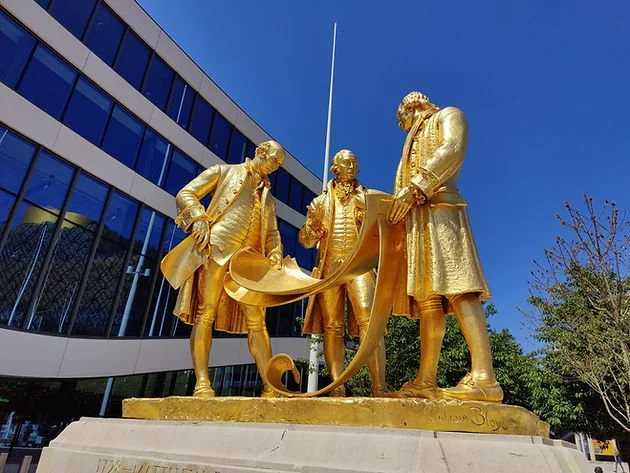
10 April 2027 | 11:00-13:00 | Malcolm Dick, ‘Matthew Boulton: Industry and Entrepreneurship’ In Birmingham, Boulton is the best-known Lunar man. Commemorated by a statue in Centenary Square and celebrated in the Soho House Museum where he lived, Boulton was a major contributor to factory development, the metal industry and the division of labour. His Soho Manufactory was the largest factory in eighteenth-century Britain and his partnership with James Watt developed the steam engine.
17 April 2027 | 11:00-13:00 | Malcolm Dick, ‘Josiah Wedgwood: Ceramics and Invention’ Wedgwood pioneered technological and artistic innovations in the pottery industry of the Stoke-on-Trent area. He marketed his products effectively to the wealthy classes and kept detailed records of his scientific experiments to improve the quality of his ceramics and glazing. He was an active campaigner against slavery and supporter of girls’ education.
24 April 2027 | 11:00-13:00 | Malcolm Dick, ‘James Watt: Science and Technology’ James Watt moved from Glasgow to Birmingham to secure a partnership with Matthew Boulton to turn his improved steam engine into a commercial proposition. Together with Boulton, he developed the Soho Foundry as the world’s first mechanical engineering production centre. Watt was a prolific inventor and developed the first commercial copying machine.
8 May 2027 | 11:00-13:00 | Malcolm Dick, ‘Joseph Priestley: ‘Religion, Science and Politics’ Priestley came from humble origins in Yorkshire via Warrington to Birmingham where he became a Unitarian minister. A contributor to new thinking about gasses and electricity, Priestley also wrote on theology, education, politics and anti-slavery. He was forced to leave Birmingham after the Priestley Riots in 1791 and fled to the USA to escape persecution.
15 May 2027 | 11:00-13:00 | Kate Croft, ‘Women of Excellent Understanding: The Wives and Daughters of the Lunar Society’ The men of the eighteenth-century Lunar Society are well known, but what about the Lunar women? Who were they and how important were they in the stories of their husbands and fathers? This session will look at some of the Lunar wives and daughters to consider the role the Lunar women played in their husbands' businesses as well as their scientific investigations and philosophical thought.
22 May 2027 | 11:00-13:00 | Kate Croft, ‘We rely entirely upon practice and experience: The Lunar Society and Education’ The men of the Lunar Society are well-known as scientists, entrepreneurs and innovators, but they were also fathers. This session will examine the influence Enlightened ideas about children and childhood had on the Lunar men and women and the part some of them played in the debates surrounding education at this time.
29 May 2027 | 11:00-13:00 | Malcolm Dick, ‘Erasmus Darwin: Medicine and Nature’ Erasmus Darwin is best known as the grandfather of Charles Darwin, but Erasmus was a key figure in the Lunar Society acting as a doctor and mentor to other members. He was based in Lichfield and Derby and was a pioneer of evolutionary thought as well as an important contributor to medicine, poetry and education.
12 June 2027 | 11:00-13:00 | Malcolm Dick, ‘James Keir: Innovation and Landscape’ James Keir is one of the least well-known Lunar men, partly because his personal records were destroyed in two fires. He met Erasmus Darwin at University in Scotland and became a major chemist and industrialist and supporter of the work of Josiah Wedgwood and Matthew Boulton. He made a particular contribution to industrial development in the Black Country.
19 June 2027 | 11:00-13:00 | Malcolm Dick, ‘The Lunar Society, Slavery and Anti-slavery’ The Lunar men had varying approaches to slavery and anti-slavery. Thomas Day, Josiah Wedgwood, Joseph Priestley and Erasmus Darwin were especially active opponents of the slave trade and slavery. In contrast, the Quaker and youngest member of the Lunar Society, Samuel Galton junior, made a lot of money selling guns as part of the African trade.
Dr Kate Croft is a freelance lecturer and researcher based in the West Midlands. In 2012 Kate completed a PhD on Lunar Society member, Thomas Day’s educational experiment, Constructing the Eighteenth-Century Woman: The Adventurous History of Sabrina Sidney, 1757-1843. Following this, Kate continued her research into the women of the Lunar Society and published a chapter on Peggy and Anne Watt in James Watt (1736 – 1819): Culture, Innovation and Enlightenment (2020, ed. Malcolm Dick and Caroline Archer-Parre) and co-edited, with Malcolm Dick, The Power to Change the world: James Watt (1736 – 1819) – A Life in 50 Objects. Kate has taught in the further education sector and worked both as an academic and public librarian. Currently, Kate is an Honorary Research Fellow at the University of Birmingham and continues her research on the social and gender history in the eighteenth-century West Midlands.
Born in Lichfield Dr Malcolm Dick was Director of the Centre for West Midlands History at the University of Birmingham until his recent retirement. Beforehand, between 2002 and 2004, he led the project which created the Revolutionary Players website: www.revolutionaryplayers.org.uk on the history of the West Midlands during the Industrial Revolution. He was e editor of History West Midlands Ltd and the journal Midland History. Malcolm has published books on Joseph Priestley, Erasmus Darwin, Matthew Boulton and James Watt as well as histories of Birmingham, the Black Country and refugees. In 2019 he was awarded an OBE for ‘outstanding services to history in the West Midlands’. Malcolm lectures widely across the region and is actively involved in local historical societies.